


Lara Al-JabaliBBC Eye Investigations

 BBC
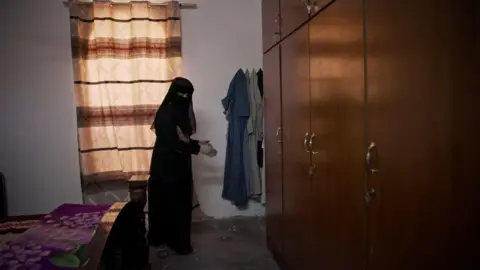
BBC“This is the room where my entire family was killed,” says Safaa Younis.
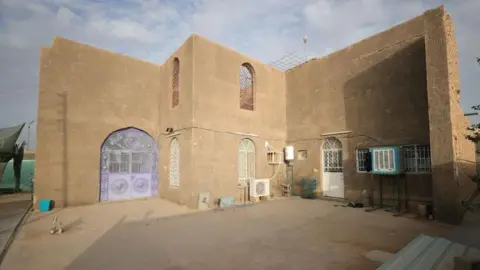
Bullet holes line the front door of the house in Haditha, Iraq, where I grew up. Inside the back bedroom, a colorful bedspread covers the bed where her family was shot.
This is where she hid with her five siblings, mother and aunt when US Marines stormed their home and opened fire, killing everyone except Safa, on November 19, 2005. Her father was also shot dead when he opened the front door.
Now, 20 years later, a BBC investigation has uncovered evidence implicating two marines, who were not brought to trial, in the killing of the Safa family, according to a forensic expert.
The evidence – especially statements and testimony given in the aftermath of the killings – raises doubts about the US investigation into what happened that day, and raises major questions about how the US armed forces will be held accountable.
The killing of Safa’s family was part of what became known as the Haditha Massacre, when US Marines killed 24 Iraqi civilians, including four women and six children. They entered three houses and killed almost everyone inside, as well as a driver and four students in a car on their way to college.
The incident led to the longest US war crimes investigation in the Iraq War, but no one was convicted of the killings.
The Marines said they were responding to gunfire after a roadside bomb exploded, killing one member of their company and wounding two others.
But Safaa, who was 13 at the time, told the World Service: “We were not accused of anything. We didn’t even have any weapons in the house.”
She survived by feigning death among the tiny bodies of her sisters and brother, the youngest of whom was three years old. “I was the only survivor out of my entire family,” she says.
Four Marines were initially charged with murder, but gave conflicting accounts of the events, and over time US military prosecutors dropped charges against three of them, granting them immunity from further legal action.
That left squad leader Sergeant Frank Wuterich as the only person to face trial in 2012.
 Michael Epstein
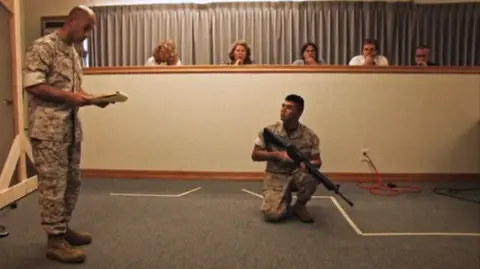
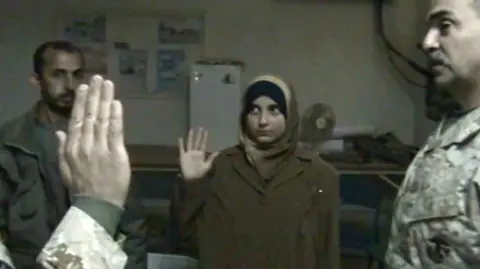
In a video recording of the pre-trial hearing, which had not previously been broadcast, the youngest member of the squad, Corporal Humberto Mendoza, was interrogated and re-enacted the events at Safa’s home.
Mendoza – who was a soldier at the time and was never charged – admitted to killing Safa’s father when he opened the front door for the Marines.
“Did you see his hands?” The lawyer asks him. “Yes, sir,” Mendoza responds and confirms that Safa’s father was not armed. “But you shot him anyway?” asks the lawyer. “Yes, sir,” Mendoza says.
Mendoza had initially claimed, in his official statements, that after entering the house, he opened the door to the bedroom where Safa and her family were, but when he saw that there were only women and children inside, he did not enter, and instead closed the door.
However, in a newly discovered audio recording from Wuterich’s experiment, Mendoza gave a different account. He says he walked about 8 feet (2.4 meters) to the bedroom.
This is very important, according to forensic expert Michael Maloney. The Naval Criminal Investigative Service sent him to Haditha in 2006 to investigate the killings and he examined the bedroom where Safa’s family was murdered.
Using crime scene photographs taken by Marines at the time of the killing, he concluded that two Marines entered the room and shot the women and children.
When we played a recording of Mendoza saying he entered the room, Maloney said, “This is amazing to me, what we’re listening to, and I’ve never heard this before today.”
He said that showed Mendoza was putting himself in the position where Maloney concluded the first shooter was standing at the foot of the bed.
“If you ask me: Is this a confession of some kind?” “What I would say is: Mendoza confessed to everything except pulling the trigger.”
Safa had submitted a video statement to the military prosecution in 2006, but it was never shown in court. In it, she described how the Marine who opened the bedroom door threw a grenade that did not explode, and then the same man entered the room and shot her family. Mendoza is the only Marine who said he opened the door.
 US Marine Corps
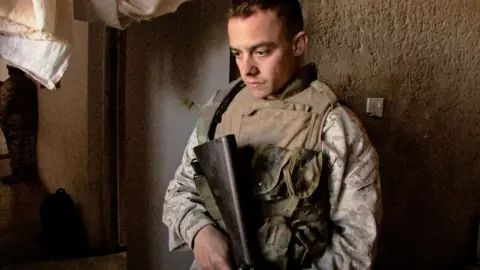
Corporal Steven Tatum, another Marine, did not deny his participation in the shooting, but said he followed the squad leader, Wuterich, to the bedroom and initially claimed he did not know there were women and children there due to poor visibility.
But in three subsequent statements obtained by the BBC, Tatum gave a different account.
“I saw children in the room kneeling,” Tatum told the Naval Criminal Investigative Service in April 2006. “I don’t remember the exact number but it was a lot. I practiced shooting two shots to the chest and two shots to the head and continued my training.”
A month later, he said he was “able to positively identify the people in the room as women and children before they were shot.”
A week later, he said: “This is where I saw the child I shot. Knowing it was a child, I shot him.” He described the child as wearing a white shirt, standing on the bed, and with short hair.
Tatum’s defense attorneys claimed that these subsequent statements were obtained under duress. The charges against Tatum were dropped in March 2008, and the statements were ignored in Wuterich’s trial.
Forensic expert Michael Maloney said that Mendoza and Tatum’s statements indicate that they are the two Marines who opened fire on the Safa family. It is believed Mendoza entered the bedroom first and Tatum followed by “shooting at the head of the bed.”
We have placed these allegations against Mendoza and Tatum. Mendoza did not respond. He had previously admitted to shooting Safa’s father, but said he was following orders. He was never charged with a criminal offence.
Tatum said through his lawyer that he wants to leave Haditha behind. He never retracted his testimony that he was one of the shooters in Safa’s house.
 Michael Epstein
Maloney told the BBC that the prosecution “wanted Wuterich to be the primary shooter.” But before Maloney could testify, Wuterich’s trial ended in a plea deal.
Wuterich maintained that he could not remember what happened at Safa’s home, and agreed to plead guilty to one count of neglect of duty – a charge unrelated to any direct involvement in the killings.
Haitham Faraj, Woutrich’s military lawyer, a former Marine, said the punishment was “a slap on the wrist… like a speeding ticket.”
Neil Puckett, Wuterich’s lead defense lawyer, said the entire investigation and trial against his client had been a “failure”.
He said: “The prosecution, by granting immunity to all its witnesses and dropping all charges against them… has made itself unable to achieve justice in this case.”
Haitham Faraj agrees that the process was deeply flawed.
He told the BBC: “The government paid people to come and lie, and the payment was like immunity, and so they abused the legal process.”
He added, “A recent trial was never intended to give a voice to the victims.”
He said that survivors’ impressions of a “show trial with no real results, without anyone being punished, were correct.”
The US Marine Corps told us it is committed to fair and open procedures under the Uniform Code of Military Justice, ensuring due process is followed. She added that she would not reopen the investigation unless a large body of new, admissible and unexamined evidence was presented.
The lead prosecutor in the case did not respond to a BBC request for comment.
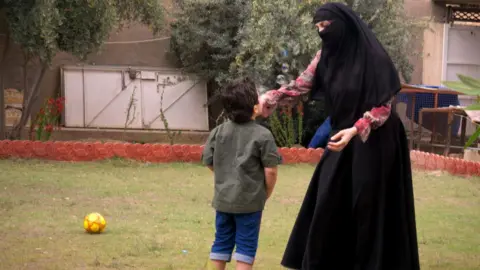
Safaa is now 33 years old, still lives in Haditha and has three children. She says she cannot understand how no Marine was punished for her family’s death.
When we showed her the video of Mendoza, she said that “he should have been in prison from the moment the incident happened, and it would have been impossible for him to see the light of day.”
“It feels like it happened last year,” she says of the day her family was murdered. “I still think about it.”
“I want those who did this to be held accountable and punished by law. Almost 20 years have passed without them being prosecuted. This is the real crime.”
Additional reporting by Namak Khoshnaw and Michael Epstein
https://ichef.bbci.co.uk/news/1024/branded_news/7a12/live/5905fee0-b8b2-11f0-aa13-0b0479f6f42a.jpg
2025-11-17 00:16:00