




 Art Deco Mumbai Trust
At a prominent architecture exhibition in Paris in 1925, the Art Deco aesthetic first exploded onto the scene.
In the 100 years that followed, the glamorous building style – evocative of neon-lit jazz bars and the golden age of big-picture motion pictures – quickly spread around the world.
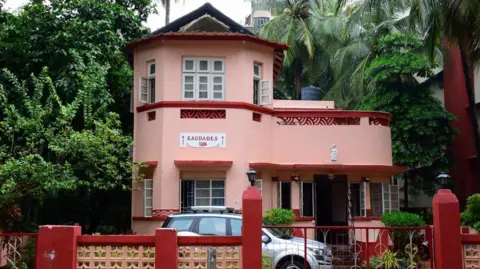
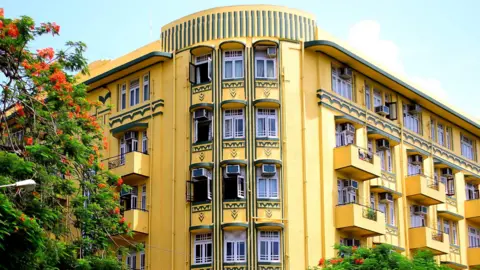
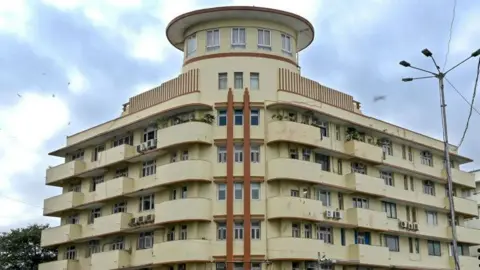
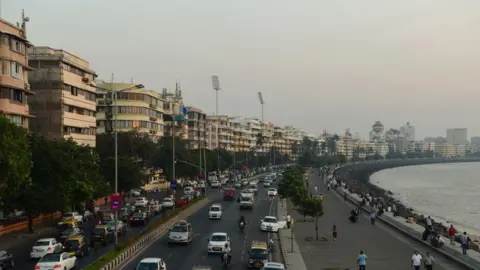
It moved from the facades of the famous Bastille hotels on Miami’s South Beach to the sprawling apartments along Mumbai’s Marine Drive waterfront.
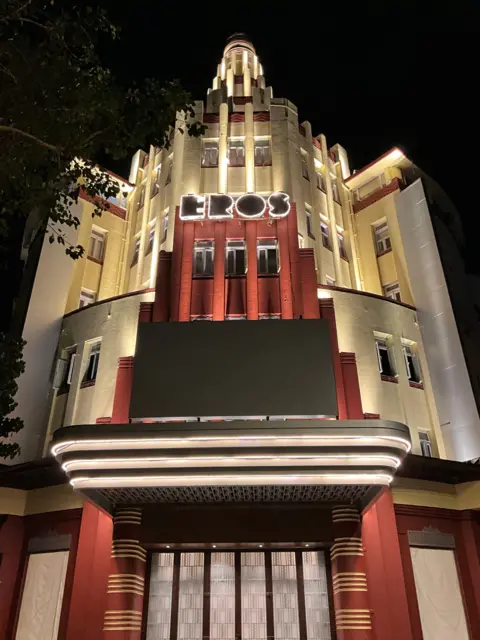
Distinctive Art Deco motifs – characterized by geometric shapes Ziggurats (stepped towers), sweeping curves, sunburst designs, nautical elements, circular or turreted surfaces – symbolizing a complete break with the past, celebrating the dawn of a new modern era in the post-war twentieth century.
In a short time, the style transcended architecture to influence the design sensibility of home interiors, furniture, lines, jewelry and some of the world’s most famous movie halls – from Radio City Music Hall in New York City to the Regal, Liberty and Eros Cinemas in Mumbai.
Atul Kumar, founder of the Art Deco Mumbai Trust and curator of the new exhibition celebrating the centenary of Art Deco in the city, told the BBC: “It represented hope, optimism and speed, in conjunction with the advent of the automobile and also with concrete as a building material, which, compared to stone, could be worked with in a tenth of the time and a fifth of the cost.”
“It was not as elaborate as the Victorian Gothic design that preceded it, and it came with a classicism and simplicity that has survived the test of time,” he said.
Nowhere was that more evident than in Mumbai, which, according to Mr. Kumar, is home to the largest documented collection of Art Deco buildings in the world. Other estimates put Mumbai in second place after Miami.
 Art Deco Mumbai Trust
 Getty Images
What made Mumbai’s take on Art Deco particularly interesting was how the city embraced its distinctive features in a truly comprehensive way.
Just like Miami, this style emerged in the city at a time of economic change and transformation, driven by the modern, commercial energy of the port city.
But unlike Miami, where “it arrived as a projection of entertainment or spectacle,” Mr. Kumar said the style in Mumbai “echoed across various building types, including schools, cinemas, shacks, petrol stations and banks.”
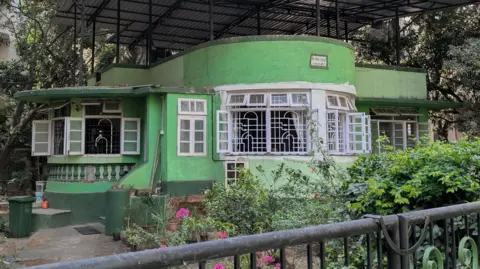
Mumbai’s Art Deco buildings were, and often still are, hidden in plain sight, with even their occupants often unaware of their cultural anchors.
Kumar added that its architectural shadow over the city may be why Art Deco has “seeped into the wider public imagination and remains so relevant to the emotional toll of Mumbai.”
 Art Deco Mumbai Trust
 Getty Images
This style was brought to Mumbai at the time when it was under colonial rule.
They were the first group of indigenous architects in India – pivotal figures like Chimanlal Master, Laxman Vishnu Sathi, and Gopalji Mulji Bhuta – to incorporate it into their designs after returning home with degrees from the Royal Institute of British Architects in London.
“They were suddenly exposed to new European sensibilities and wanted to bring them back to their country, which had been deeply colonized by the imposition of Victorian buildings,” Kumar said.
 Getty Images
 Murthy Furniture
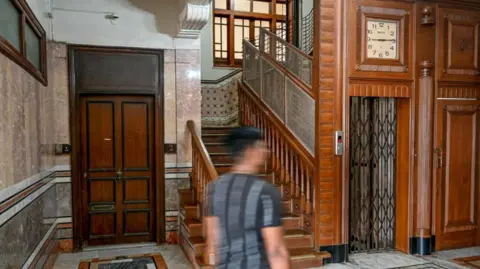
But they adapted Art Deco and made it vernacular, throwing in local design styles, and drawing inspiration from disparate local elements including ocean liners moored in Mumbai’s harbours, and even the lattice screens so typical of Mughal architecture.
The British were initially dismissive, calling Art Deco “lesser architecture,” but they were supposedly threatened, Mr. Kumar said, because it signaled the dawn of a new era and new identities were shaping public spaces in India.
It was only a matter of time before the South Mumbai skyline became a rich confluence of Indo-Gothic, Gothic and Art Deco buildings.
 Getty Images
 Art Deco Mumbai Trust
Today, Mumbai is once again a rapidly changing city, where the building code is governed by real estate tycoons trying to maximize the floor space index, giving way to utilitarian rather than stylistic considerations.
Dozens of Art Deco buildings have been wiped out to make way for glass and steel facades, and hundreds more are under threat.
Over the past decade, Mr. Kumar has documented more than 1,500 buildings that truly represent this style, but only 70 of them are protected.
The authorities are indifferent to preserving these properties, so his organization deals directly with people, offering free repair and restoration consultations to prevent them from giving up their properties to builders for redevelopment.
“The response has been positive as people have seen the value of their properties increase after the renovation work,” Kumar said.
Then there are others, like architect and designer Neddy Tekwani, who reimagines Art Deco objects and hopes to adapt them to a contemporary context.
For example, Art Deco furniture was often bulky, its light fixtures were intended for high ceilings, and its dressing tables were too complex for today’s small apartments. Ms. Tikwani aims to design and launch more elegant products while maintaining the basic Art Deco principles.
“The hope is to translate it into something modern and well-suited to the demands of our current lifestyle,” Ms. Tikwani said of her efforts to keep Art Deco a living tradition in a city that reshapes itself every blink of an eye and the next.
Follow BBC News India on Instagram, youtube, X and Facebook.
https://ichef.bbci.co.uk/news/1024/branded_news/60d6/live/a31cba80-c5ca-11f0-9037-b7a6a02d7012.jpg
2025-11-23 01:57:00