


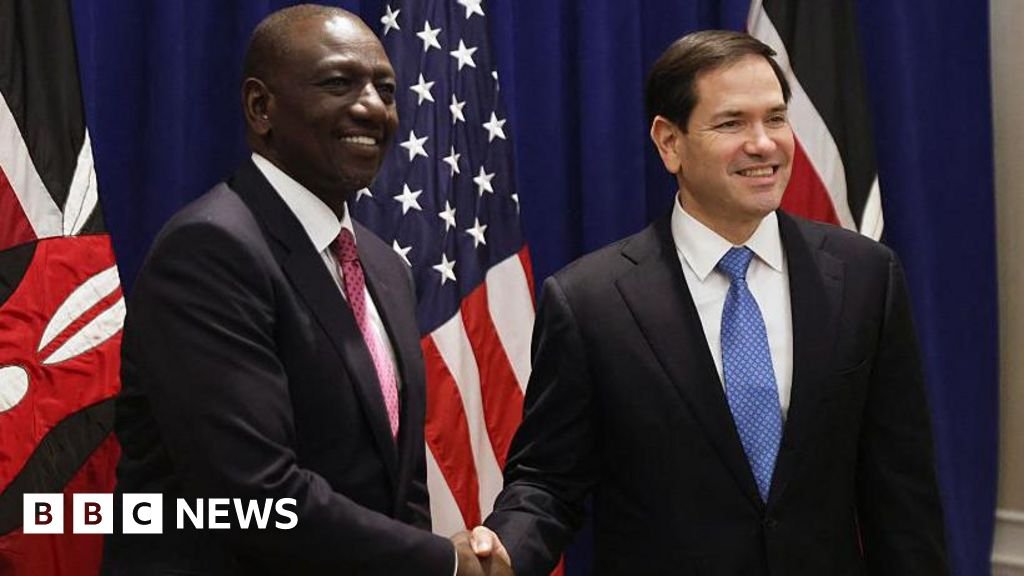
Kenya has signed a landmark five-year health agreement with the United States, the first of its kind since the Donald Trump administration overhauled its foreign aid program.
The $2.5bn (£1.9bn) deal aims to combat infectious diseases in Kenya, and similar agreements are expected to be implemented in other African countries in line with Trump’s broader foreign policy goals.
The government-to-government deal aims to promote transparency and accountability, but has raised concerns that it could give the United States real-time access to critical health databases, including sensitive patient information.
Kenyan Health Minister Aden Duale sought to allay these concerns, saying that only “aggregated, de-identified data” would be shared.
On his first day in office in January, Trump announced a freeze on foreign aid as part of a government spending review, dismantled the U.S. Agency for International Development (USAID), and cut billions in aid to poor countries.
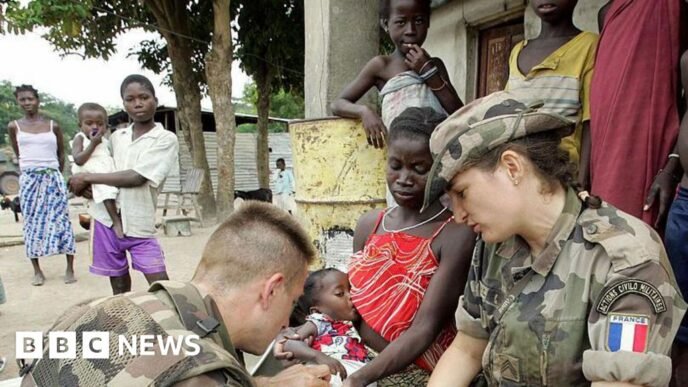
This has led to a significant reduction in the availability of some medicines in developing countries.
In September, the Trump administration introduced its “America First Global Health Strategy,” making aid dependent on negotiations that officials said would reduce waste and advance U.S. priorities.
Under the agreement with Kenya, the United States will contribute $1.7 billion, while the Kenyan government will cover $850 million and gradually assume more responsibility.
The agreement aims to prevent and treat HIV/AIDS, malaria, tuberculosis, maternity care, eradicate polio, and respond to and prepare for infectious disease outbreaks.
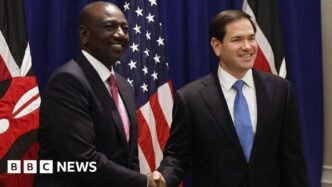
Upon signing the agreement with Kenyan President William Ruto, US Secretary of State Marco Rubio described it as a “historic agreement” and referred to Kenya as a “long-standing ally of America.”
He praised Kenya for its leadership and contribution to the UN-backed mission working to combat powerful gangs in Haiti.
“If we have five or 10 countries that are willing to step up and do half of what Kenya has already done, that would be an extraordinary accomplishment,” Rubio said.
The Secretary of State explained that the United States wants its foreign aid to go directly to governments, and not through relief agencies and charities.
“We will not spend billions of dollars to fund the NGO industrial complex while close and important partners like Kenya either have no role to play or have little influence on how healthcare dollars are spent,” he said.
The Kenyan president said the money would be used to work on achieving the country’s priorities, such as purchasing modern equipment for hospitals and strengthening the health workforce.
“I assure you that every shilling and every dollar will be spent efficiently, effectively and responsibly,” Ruto added.
However, some Kenyans are demanding that the full agreement be disclosed, with concerns that it would allow the United States to see personal medical records such as HIV status, tuberculosis treatment history, and vaccination data for Kenyan patients.
“What specific categories of data are being shared? Is genomic data, disease patterns, mental health data, insurance claims, hospital records, or biometrics included? If not, why isn’t it explicitly written in?” Attorney Willis Otieno posted on X.
Famed whistleblower Nelson Amenya expressed similar concerns, urging the Kenyan government to publish the full agreement “so we can read it for ourselves.”
Minister Duale dismissed these concerns, insisting that health data in Kenya remains safe and fully protected under Kenyan laws.
“Your health data is a national strategic asset,” Duale added.
US officials have not yet commented on the data concerns.
A number of other African countries are expected to sign similar agreements by the end of the year, according to US officials.
https://ichef.bbci.co.uk/news/1024/branded_news/8893/live/0b7c9720-d1ac-11f0-83cd-5b415fb0080a.jpg
2025-12-05 10:33:00