



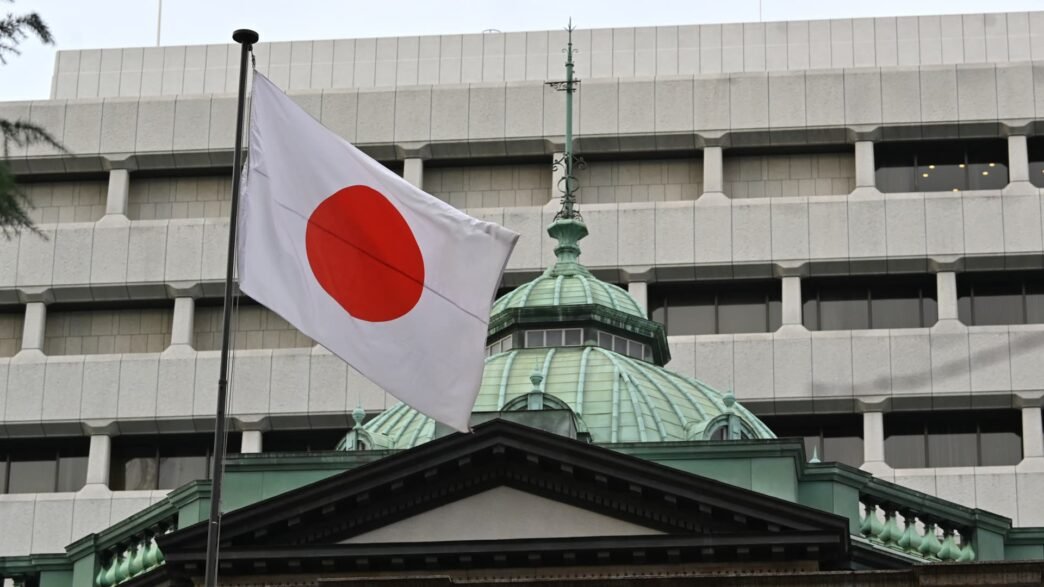
Huge amounts of money are flowing from Japan to European technology startups, as risk-averse investors favor a more mature entrepreneurial ecosystem, helping to expand the reach of the continent’s burgeoning deep tech cluster.
While the European startup and venture capital ecosystem has long operated in the shadow of Silicon Valley, it has become fertile ground for Japanese companies, whose home market is younger.
Japanese investors or venture capital funds with Japanese investors, known as limited partners, have participated in European financing rounds worth more than 33 billion euros ($38 billion) since 2019 when the EU-Japan trade deal took effect, according to research by venture capital fund NordicNinja and data platform Dealroom.
Over the five years preceding the EU-Japan Economic Partnership Agreement, total investment amounted to €5.3 billion.
In Europe at that time, “there was no capital other than Japan SoftbankTomosako Suhara, co-founder and managing partner of Japan-European VC firm NordicNinja, told CNBC. NordicNinja, which has assets under management of €250 million, is a joint venture between Japan’s JBIC IG Partners and private equity firm BaltCap.
“Softbank was already very active at that moment, because they had acquired the Finnish gaming company Supercell,” Suhara said, noting that the acquisition injected life into Finland’s startup ecosystem.
now, Mitsubishi, Sanden, Yamato HoldingsMarunouchi Innovation Partners are among those directly backing European technology, according to the report, while Japanese-linked venture capital firms such as NordicNinja, Byfounders, ToyotaWoven Capital’s subsidiary Woven Capital has cut checks for startups on the continent.
The number of venture capital-backed startups in Europe is more than twice that of Japan, per capita, and 4.3 times the number of unicorns, according to the report.
Shadow of Silicon Valley
Japan’s appetite for investment has always been there, Suhara said. Its multinationals – like many of them – headed to the US to set up corporate venture capital arms in the early 2000s, looking for a piece of the action at a time when some of today’s biggest companies were being conceived in dorm rooms.
“No one wanted to look at Europe at that moment, but I think after a few years they realized, maybe American culture is very different from Japanese culture, and they started thinking, maybe we need to look at another region like Europe,” Suhara said, adding that the profile of entrepreneurs in Europe, many of whom came from large companies at the time, was more aligned with Japan. This contrasts with young founders coming from Stanford or university R&D departments, he said.
“They have corporate experience and also have an entrepreneurial mindset. Japan, unfortunately, lacks an entrepreneurial mindset,” Suhara added, referring to Europe’s founders, many of whom came from Europe. Nokia and skype.
Attraction for founders
Japan-linked investors have an affinity for one sector in particular: deep tech, which refers to companies that rely on scientific or engineering innovation. Deep technology and AI accounted for 70% of deals closed by these investors in Europe in 2024, reflecting trends in the broader startup ecosystem as the AI, energy and defense industries boom.
Companies with the most funding with Japanese participation include British self-driving vehicle startup Wayve, which It raised $1.05 billion in an investment round In May 2024, British quantum computing company Quantinuum, which secured €273 million in January 2024, and Spanish quantum company Multiverse Computing, which saw investors cut a check for €189 million in June 2025. The rounds were backed by Softbank, Mitsui and Toshiba, respectively.
However, such companies typically need a significant amount of growth capital and industry expertise to be able to expand successfully – two elements that Europe is famously lacking in.
“Investment appetite is much stronger than… [in] Any strategies you’ve seen here in Germany or in Europe.”
Sarah Fleischer
Co-Founder and CEO of Tozero
“Japanese companies — which are old, most of which we’re talking about, right — are sitting on a pile of money,” said Sarah Fleischer, co-founder and CEO of Germany-based battery materials recycling startup Tozero. “They’ve been saving money for the last century, and now they’re starting to spend it, to try to grow as a big company and increase their footprint outside of Japan.”
“You see that the desire to invest is much stronger than… [in] “I haven’t seen any strategies here in Germany or in Europe,” she added. Tozero has raised €14.5 million to date and counts NordicNinja, Honda and JJC among its investors.
It’s not just about the check. Fleischer and Suhara respectively noted that Japanese companies and industries have strong manufacturing and automotive experience, meaning they are well placed to fill knowledge gaps in Europe when it comes to scaling up large manufacturing projects.
Fleischer added that Japanese companies have Supported their important minerals for a long time The supply chain and trading companies are well-established, which means they know how to secure the essential components needed for the energy transition. For Tozero, this is a plus, since it is in the business of recovering such materials from spent batteries, Fleischer said.
In an era of political uncertainty amid volatile US-China relations, Japan also serves as a good bridge to Asian markets, Fleischer said.
Slower pace and lower appetite for risk
In Japan, the number of entrepreneurs is still “very limited,” Suhara said, with the older generation and “great talents” wanting to work for “Toyota, Honda or Sony,” but the mentality of the younger generation is starting to change.
Europe has also become home to ambitious founders looking for a technology ecosystem in which to build their companies, Suhara said.
He added that as cooperation between Europe and Japan expands, language remains a barrier because English proficiency is not widespread in Japan.
For Fleischer, this also presents challenges. “There’s a lot of misunderstanding and localization that can instantly ruin a partnership. There’s also kind of a cultural aspect as well, which one probably needs to be aware of,” she said, adding that she recently spent weeks in Japan getting to know her investors face-to-face, “because that’s still the feeling” there.
The founder said the decision-making process can be slower due to extensive research and preparation. “They’re just doing their homework,” Fleischer said, noting that the Japanese partners have been hands-on in helping the company understand “how to build our next future commercial plant, potentially starting in Japan and then moving around the world.”

In fact, “without support from NN [NordicNinja] “It was very difficult to build the right relationships,” said Aike van Vogt, co-founder and CEO of Dutch nanotechnology engineering company VSParticle.
This is in contrast to the more famous Japanese player: Softbank. SoftBank is “quite different” from traditional Japanese investor cultures, Suhara added, since it is driven by the decisions of founder Masayoshi Son rather than working on the basis of consensus, like most Japanese companies.
The investment firm, known for its lofty bets on WeWork and, more recently, chip company Arm, has poured huge sums of money into tech startups amid the 2021 venture capital technology boom, which saw at least one Japan-linked investor participate in deals worth €11.2 billion, according to the report. SoftBank emerged during this period; It participated in 22% of deals with Japan-related involvement in 2021.
Interest is knocking
Looking to the future, Sohara and Fleischer expect greater cooperation between Europe and Japan. However, Japanese investors are expected to participate in €3 billion worth of rounds in 2025, according to Dealroom and NordicNinja, which is a decrease from last year.
As many eyes turn To the Middle East for investmentFleischer said interest in Japan appears to be growing. “People reach out to me for introductions, which is fun, to meet Japanese limited companies,” she anecdotally says, noting that this is a new development for her but it may simply be because such investors now exist.
“I think it’s also politically driven in Japan, by the government, to position itself more geopolitically astutely and make sure that companies or industries grow in certain ecosystems, which strengthens their position as a country,” she said.
https://image.cnbcfm.com/api/v1/image/107350350-1703123113518-gettyimages-1858399319-AFP_34884Y3.jpeg?v=1762518007&w=1920&h=1080
2025-11-10 11:22:00