


Zainab Muhammad SalehJabal Marra

 BBC
BBCThere is a place in Sudan where it is almost possible to forget that there is a devastating civil war going on.
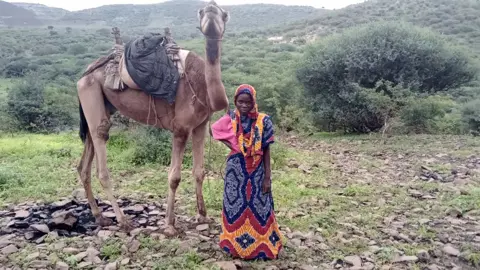
Dressed in bright colors and wearing plastic sandals, women in the country’s Jebel Marra mountains set out every morning on donkeys, accompanied by children, to work in the fields.
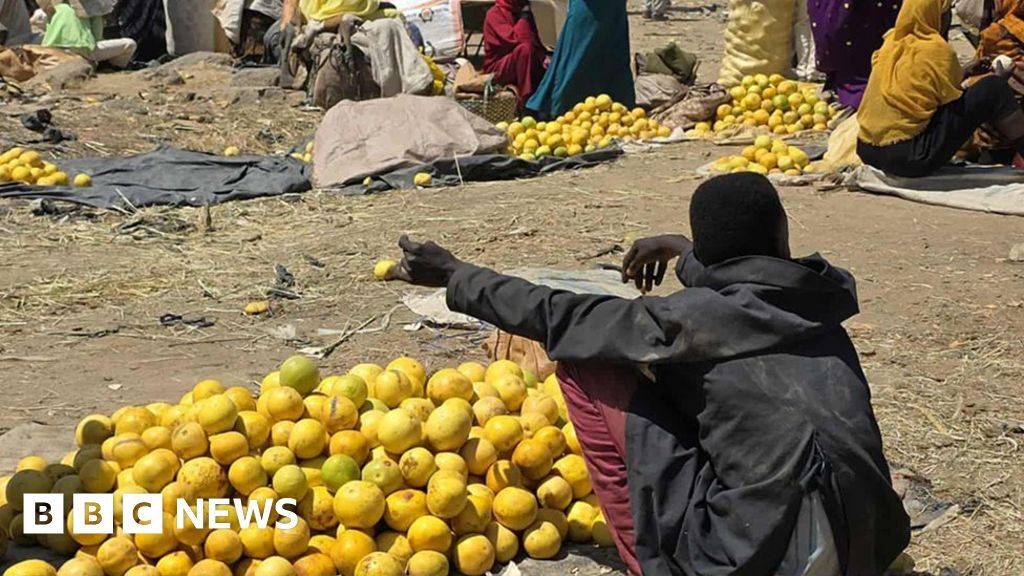
In a climate similar to that of the Mediterranean and using fertile soil, they grow peanuts, oranges, apples and strawberries – rare crops for a country now facing one of the world’s worst hunger crises. Before the conflict, Jebel Marra’s organic oranges were highly prized throughout the country for their juiciness.
The mountainous region in this part of the western Darfur region is dotted with green peaks, especially since we are now in the rainy season.
The rest of Sudan teeters on the brink of disaster.
Across the country, as a result of two-and-a-half years of fighting that has paralyzed agriculture, nearly 25 million people – half the population – face severe food shortages, including more than 600,000 suffering from famine, according to the United Nations.
But in the fertile highlands of Jebel Marra, the problem is not growing food, but getting the produce out.
“We sell them almost for free and sometimes we throw them away on the way [to market]“They are rotting,” says Hafez Ali, an orange seller in the mountainous town of Golo in Central Darfur state.
Insecurity and poor road conditions make transportation almost impossible.
 Zainab Muhammad Saleh
Jebel Marra is the last remaining territory controlled by the Sudan Liberation Army-Abdul Wahid (SLA-AW). This armed group has remained neutral in the current war. It never signed a peace agreement with the authorities in Khartoum dating back to 2003 and the conflict over Darfur at that time.
The Sudan Liberation Army-Abdul Wahid faction has controlled what locals describe as “liberated areas” for more than two decades.
Now, with the region surrounded by war on all sides, it is becoming increasingly isolated.
In the west and north, the Rapid Support Forces and allied Arab militias closed main roads. In the south, Rapid Support Forces positions are bombed almost every week by the Sudanese army – and these attacks also claim civilian lives.
The Rapid Support Forces also control areas to the east.
The result is a closed environment, where farmers and middlemen no longer have access to national markets in the cities of El Fasher, 130 kilometers (82 miles) away, or Tina, on the Chadian border, 275 kilometers (170 miles) away.
There are other alternatives but they do not have the same national scope and they all involve treacherous journeys.
Tawila, on the edge of SLA-Abdullah Faction territory, became the site of a makeshift market. It is located on the road leading to El Fasher, which was cut off by the siege of the Rapid Support Forces, and has become home to tens of thousands who were able to flee that city.
Because of the difficulty of transporting the products further, there is an oversupply in the market and as a result prices here have fallen.
There are some here looking to buy supplies to try to smuggle products into El Fasher – an extremely dangerous and life-threatening trade.
Getting the goods that far was always a challenge, and food would sometimes rot on the way.
Youssef, a fruit seller in Al Taweelah, says: “Traveling a distance of approximately 12 kilometers requires a full day of driving through mountains and mud.” But now he says insecurity is making things worse.
In Central Darfur, a recent truce between leaders of the Fur ethnic tribe – dominant here – and Arab Bedouins has allowed limited trade in some areas.
Markets have reopened in the SLA/AW-controlled town of Nertiti, with Arab women selling sour milk and Fur farmers bringing in fruits and vegetables. But the arrangement is fragile.
“The market only opens once a week,” says a trader from Nertiti. “Travel is still dangerous.”
He added: “Armed robberies are still occurring on the roads, even after the agreement.”
Fruits and crops can now also be sold in the market in Zalingei, the capital of Central Darfur state, which is controlled by the Rapid Support Forces. But Arab militias allied with the Rapid Support Forces are often accused of harassing or attacking civilians in the region, although these groups deny any wrongdoing.
Every Thursday, which is market day, the number of checkpoints between Nirteti and Zalingei increases, sometimes reaching more than twenty checkpoints. But with more vehicles on the road on market days, more people are taking the opportunity to travel.
Sometimes the checkpoints, some manned by RSF fighters and others by Arab militias, are manned by just one armed man in civilian clothes, demanding a fee. Drivers will often try to negotiate while passengers watch silently.
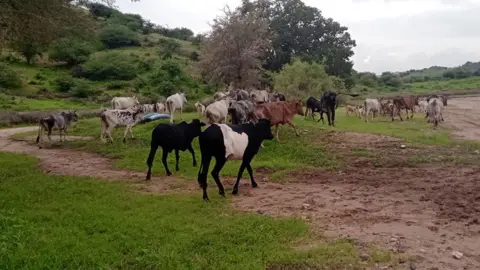 Zainab Muhammad Saleh
Back in the Jebel Marra area, SLA/AW checkpoints guard all roads leading to the mountains, and armed men demand money.
Bags are searched for contraband, including skin-whitening creams, widely used elsewhere in Sudan, and confiscated.
Once inside the area controlled by the Sudan Liberation Army-Abdul Wahid Faction, despite the relative peace, there are clear signs of conflict elsewhere in the country.
Trucks full of people fleeing the fighting can be seen, especially around El Fasher, on a daily basis.
Many are finding shelter in schools, clinics and other public places, receiving little or no humanitarian assistance – and aid agencies are struggling to cross all checkpoints.
In Golo, the de facto capital of SLA/AW territory, a woman who fled El Fasher described harsh conditions. She is now sheltering in a classroom with 25 other newly arrived families.
The woman said: “We have no income. We have no jobs to do. I used to work as a nurse and I can farm, but the land here is owned by people who work only for themselves. We do not know what to do.”
As she spoke, the sick and elderly were lying on the ground and children were screaming from hunger. At least there will be some relief because the food that can’t be taken out of Golo will be available.
This is the Jebel Marra region, a strange world surrounded by war. A world of green mountains and waterfalls. A world of bright and juicy fruits. A world of frightened displaced people.
One fruit trader said he had lost hope in the warring parties.
“We are not part of the war – we just want to sell our oranges.”
More about the war in Sudan:
 Getty Images/BBC
https://ichef.bbci.co.uk/news/1024/branded_news/fd11/live/9ad8e670-b0c4-11f0-ba75-093eca1ac29b.jpg
2025-10-25 23:24:00